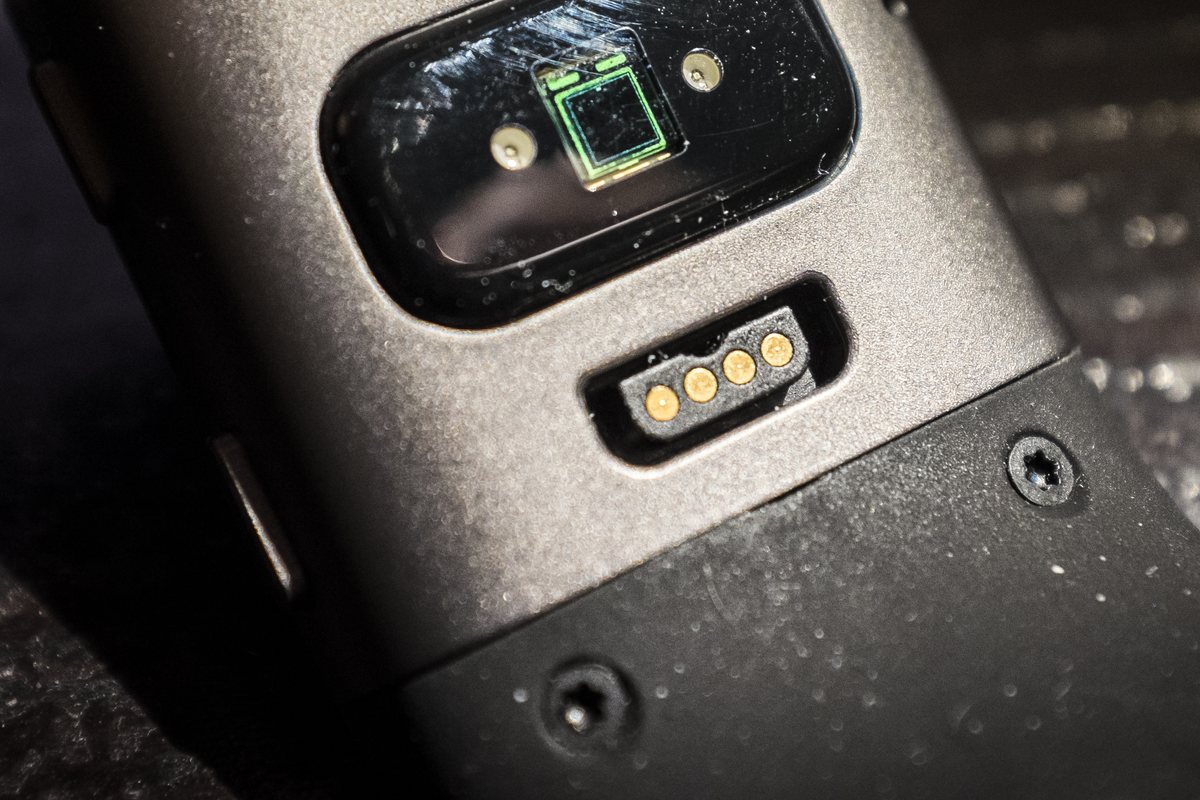

Four trackers without a screen landed inside fifteen months. Under the shell they carry an identical sensor set, and the comparison catalogue says all four record the same twelve health signals. Three features belong to exactly one device each: atrial fibrillation alerts to the Fitbit Air, Body Battery to the CIRQA, cardiovascular age to the Oura Ring 5. What really separates them is where you wear them and what they cost over three years, which is anywhere from about $100 to $717.
For a decade the industry sold one idea: a small screen on your wrist. In 2026 the screen came off. Google launched the Fitbit Air in May, Oura began shipping the Ring 5 on 4 June, Garmin put the CIRQA on sale on 24 July, and the WHOOP 5.0 has been on wrists since 2025. Four flagship devices whose only display is the phone in your pocket.
That makes them look interchangeable in a way watches never were. Nothing to compare on the outside, no screen to admire, three bands and a ring that all promise to tell you how recovered you are. So rather than read four marketing pages, I opened the comparison catalogue, where every one of 113 devices is scored against the same 33 health signals, and lined the four of them up row by row.
The same four sensors, four different names
The first finding is the least glamorous one. All four devices carry the same hardware: an optical heart-rate sensor, a red and infrared pair for blood oxygen, a skin-temperature sensor and an accelerometer. No electrode, no cuff, no altimeter, on any of the four.
That matters more than a spec sheet suggests, because everything downstream is software running on those four inputs. Body Battery, Recovery, Readiness, WHOOP Age: none of them is a measurement. They are four companies interpreting the same raw material, and they disagree, which is exactly why a score from one brand cannot be read against a score from another.
Twelve measurements they all share
Line the four up against the catalogue and the overlap is almost total. Every one of them records resting heart rate, heart-rate variability, blood oxygen, respiratory rate and skin temperature, plus sleep duration, sleep stages and a sleep score, plus steps, calories, workouts and a daily recovery or readiness score. Twelve signals, identical across all four.
Totals: the CIRQA and the Ring 5 read 18 of the 33 signals, the Fitbit Air 17, the WHOOP 5.0 16. Two signals apart, top to bottom. If you were hoping the numbers would pick a winner for you, they will not.
Where they actually differ
Nine rows separate them, and only three of those belong to a single device.
Atrial fibrillation alerts, only on the Fitbit Air. Google's band watches the optical pulse in the background and raises a flag when the rhythm looks irregular. It records no ECG trace, so the alert is a reason to see a doctor, not a diagnosis. Still, it is the only one of the four that watches rhythm at all.
Body Battery, only on the CIRQA. Garmin's energy gauge is the most literal answer to the question people actually put to a tracker, which is whether they have anything left in the tank today.
Cardiovascular age, only on the Oura Ring 5. Oura turns overnight signals into an age figure. Read it as a trend line rather than a clinical number, and do not confuse it with the vascular age a smart scale derives from arterial stiffness, which is a different measurement none of these four can make.
The remaining six rows split three against one, and each gap says something about the company that left it out.
| Signal | Garmin CIRQA | Fitbit Air | Oura Ring 5 | WHOOP 5.0 |
|---|---|---|---|---|
| AFib detection | no | yes | no | no |
| Energy / Body Battery | yes | no | no | no |
| Cardiovascular age | no | no | yes | no |
| VO2max | yes | no | yes | yes |
| Training load | yes | yes | no | yes |
| All-day stress | yes | no | yes | yes |
| Sleep efficiency | no | yes | yes | yes |
| Active minutes | yes | yes | yes | no |
| Distance | yes | yes | yes | no |
Read the columns and each device confesses what it thinks you are. WHOOP skips distance and active minutes because it does not believe in the step as a unit of effort; it counts strain instead. Oura skips training load because it is a sleep and recovery instrument that tolerates workouts. The Fitbit Air has no stress score at all, and that is a product decision rather than a sensor one: all four carry the same four sensors, not one of them measures skin conductance, and three of them publish a stress figure anyway, derived from heart-rate variability. Google left VO2 max off the launch materials, so the catalogue leaves it off too rather than guessing. And the one gap the CIRQA owns alone is sleep efficiency: Garmin publishes a sleep score and the stages under it, but never the time-asleep over time-in-bed percentage the other three print.
Twelve things none of them can tell you
Blood pressure. An ECG trace. Core body temperature, which is not the skin temperature all four do read. Floors climbed. An apnea index. Vascular age, the arterial-stiffness figure a smart scale computes. And the six rows that same scale fills on its own: weight, body fat, muscle mass, bone mass, visceral fat and hydration.
None of this is a flaw. It is what a small sensor package on a strap can and cannot do. It does mean that a screenless tracker is a sleep and recovery instrument first, and that beyond the pulse and the irregular-rhythm flag the Fitbit raises from it, anything cardiac still needs a watch with an electrode, a cuff or a scale. WHOOP is the only brand here that sells the cardiac layer, and it does so on different hardware: the MG device in the top membership tier carries ECG and blood pressure insights, and the WHOOP 5.0 in this comparison does not.
What a missing signal does to your score
Here is the part no spec sheet warns you about.
Every one of these devices ends in a score: readiness, recovery, a colour, a number. Scores are built by rules, and rules ask questions about signals. When a signal never arrives, a naive rule reads its absence as bad news instead of as no news.
Take the stress row in the table above. Fitbit publishes no all-day stress index, so any rule that expects one has to decide what an empty column means. Read it as “no stress data” and the day is scored on what the band actually sent. Read it as “stress is not good enough” and the same night on a Fitbit and on a Garmin lands in two different states, with the missing sensor doing the work instead of the body.
That second reading is easy to write by accident. A rule shaped that way holds a whole brand a tier below its own ceiling for as long as it stands, and nothing on the device or in the app tells the owner why: the number simply never goes higher, and it looks like a verdict about them.
So when you compare two people wearing two brands, or compare yourself before and after a switch, part of the difference you see is the empty rows in the table above rather than the state of anybody's body.
Where you wear it, and for how long
This is the choice that actually changes your day. The Oura Ring 5 is a titanium ring 6.09 mm wide and 2.28 mm thick, waterproof to 100 metres, which you forget within a week and remember the moment you pick up a barbell. The CIRQA is the only one of the four that moves to the upper arm, which is the answer for people who cannot sleep with something on the wrist. The Fitbit Air is the smallest tracker Google has built, and the WHOOP is the one you charge without taking off.
The bill after three years
Here the four stop looking alike. Same sensors, same twelve measurements, and more than six hundred dollars between the cheapest and the dearest.
| Device | Hardware | Required subscription | Three years |
|---|---|---|---|
| Fitbit Air | $99.99 | none for the measurements | about $100 |
| Garmin CIRQA | $199.99 | none | about $200 |
| Oura Ring 5 | $399 | $5.99 a month, or $69.99 a year, for the scores | about $609 to $615 |
| WHOOP 5.0 | not sold separately | $199 to $239 a year | $597 to $717 |
Two caveats keep this honest. Google sells a Health Premium tier separately, and it gates the coaching layer rather than the numbers, so a Fitbit Air owner who wants the coach pays more than the hundred dollars in the table. And an Oura ring keeps recording without a membership; what Oura says you lose are the insights and the personal health data, which is most of what you bought a ring for.
Note what the money does not buy. The CIRQA asks for nothing after purchase and still ties the Ring 5 for the most signals in the group, and the Fitbit Air, at a sixth of Oura's three-year cost, gives up exactly one signal. If you want the Garmin side of that read in depth, the CIRQA has a review of its own.
Whether you can take the data with you
A tracker you wear for three years is three years of data about your own body, so it is worth knowing who lets you move it.
All four vendors run a developer interface of some kind. Fitbit states plainly that anyone may use its Web API to build integrations, with the user's consent, and it exposes heart rate, HRV, sleep, breathing rate, temperature and more. Oura's V2 API works the same way through OAuth, after the deprecation of the old personal access tokens. WHOOP runs a developer platform with OAuth and webhooks over sleep, recovery and strain. Garmin's Health API sits behind an approval process, which is the one difference that shows up in practice.
Which one to buy
Buy the Fitbit Air if the price is the point, or if rhythm alerts matter to you. A hundred dollars buys seventeen signals, and it is the only one of the four watching for atrial fibrillation. That is the value case of the year, as long as you can live without a stress score.
Buy the Garmin CIRQA if you train and you want the numbers to keep working with no meter running. It is the only one that offers the upper arm, and it carries training load, VO2 max and Body Battery for one payment.
Buy the Oura Ring 5 if you care most about sleep and you want to feel nothing at night. Accept the membership as part of the price, because without it the ring is a recorder rather than a coach.
Buy the WHOOP 5.0 if you already think in strain and recovery, want the longest battery in the group, and treat the annual fee as coaching rather than as a subscription to your own data.
And if you want the full row-by-row sheet against the other 109 devices in the catalogue, that is what the comparison tool is for. It is free and it asks for nothing.
Sources
Signal counts and sensor lists come from the 113-device catalogue behind the comparison pages on this site, which is built from vendor documentation rather than marketing copy. Battery figures come from the manufacturers, which is why the Ring 5 is given here as a size-dependent range rather than as the single week the catalogue records. Fitbit Air price, battery and sensor claims: Google's own launch post. Oura Ring 5 dimensions, battery and water rating: the Oura store page; membership pricing: Oura's membership page. CIRQA price and specification: the Garmin product page and launch press release, as checked for the CIRQA review. WHOOP membership tiers are as reported by Engadget and Tom's Guide; WHOOP's own pages refuse automated requests, so the figures are attributed rather than read at the source. API availability: the Fitbit Web API reference, the Oura developer documentation, the WHOOP developer platform and the Garmin Health API programme page, all checked on 2026-09-04.
Disclosure
This article runs on the Aiclysm site, and the instruments it leans on are ours: the 113-device catalogue and the comparison pages built on top of it, both of which belong to MyBodyAI, the health app I build. Vendor prices, specifications and API terms are sourced above and can be checked without us. If the app half interests you: the Fitbit Air and the Oura Ring 5 connect to it with a login, Garmin data arrives as a file export because Garmin has not granted API access, and WHOOP has no integration.
Frequently asked questions
Which screenless tracker measures the most?
The Garmin CIRQA and the Oura Ring 5 both record 18 of the 33 health signals scored in the comparison catalogue, the Fitbit Air 17 and the WHOOP 5.0 16. The counts sit within two of each other, so the totals are the least interesting part. What matters is which two or three signals you personally need.
Do any of them measure blood pressure or record an ECG?
None of these four. The Fitbit Air raises atrial fibrillation alerts from its optical sensor, but it records no ECG trace, and an alert is a prompt to see a doctor rather than a diagnosis. WHOOP sells ECG and blood pressure insights on separate MG hardware in its top membership tier, not on the WHOOP 5.0.
Which of them needs a subscription?
WHOOP is a membership: the band is not sold on its own and stops being useful when the membership lapses. The Oura Ring 5 keeps working without a membership, but Oura states that insights and personal health data are much more limited, and the membership is $5.99 a month or $69.99 a year with the first month free. The Garmin CIRQA needs nothing. The Fitbit Air needs nothing for its measurements; Google Health Premium only unlocks the coaching layer and three months are included.
Which one lasts longest on a charge?
WHOOP 5.0 at roughly 14 days, then the Garmin CIRQA at up to 10, the Oura Ring 5 at six to nine depending on ring size, and the Fitbit Air at up to a week, where five minutes on the charger buys another day.
Can I use these trackers with MyBodyAI?
The Fitbit Air and the Oura Ring 5 connect with a login. Garmin data, CIRQA included, arrives as a file export you upload yourself, because Garmin has not granted us Health API access. WHOOP has no integration with MyBodyAI today.
Is a ring better than a band?
For the numbers, the catalogue says the Oura Ring 5 and the Garmin CIRQA record the same count of signals, so the choice is about wearing rather than measuring. A ring is invisible in bed and useless under a barbell, a band survives the gym but many people dislike it overnight, and the CIRQA is the only one of the four that also rides on the upper arm.
Found this useful? Share it.